What to share with a trusted contact before a date
A privacy-conscious guide to the date details a trusted contact may need, what they do not need, and how to agree on a useful response plan.
A trusted contact usually needs five things: where you are going, when you expect to be there, how you are getting home, the identity information you actually have, and what they should do if you miss a check-in. More information is not automatically safer.
The useful minimum
- Venue: the name and address, plus any planned second location.
- Timing: arrival time, check-in time, and an approximate end time.
- Transportation: how you plan to leave and whether anyone is driving you.
- Who you are meeting: a profile screenshot, name, or phone number you already have.
- Response plan: who calls, who texts, how long to wait, and when to escalate.
What your contact usually does not need
They do not need access to all of your messages, permanent location history, passwords, or private details unrelated to the safety plan. Avoid collecting or circulating more information about the other person than the plan requires. Keep the information inside the small circle you selected.
Ask them to opt in
Do not assume someone will see a message or know what to do. Ask whether they can be your check-in person for that window. Confirm that their phone is on and agree on a backup person if they become unavailable.
Write the response ladder
A simple ladder might be: send a neutral check-in, call once, contact the second circle member, then follow the emergency action you agreed on. Your contact should not put themselves in danger by confronting someone or traveling to an unsafe location.
How DateSafe handles sharing
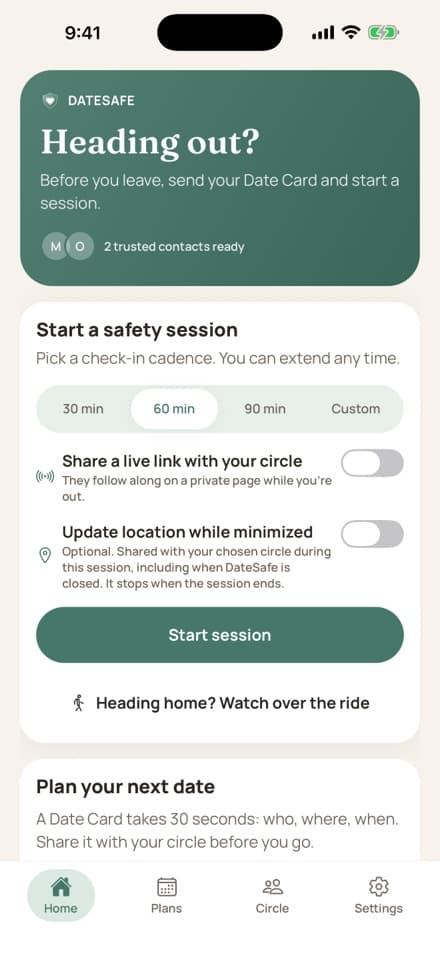
DateSafe lets you create a Date Card and choose trusted contacts. During an active session, eligible private watch links can show session information and recent location to the accepted contact. When the session ends, session location sharing stops. Panic, duress, and missed-check-in alerts can include the latest available location, but location depends on device permission and availability.
Sources and further help
DateSafe is not an emergency service. These independent resources provide additional guidance, and 911 should be called for immediate emergency assistance in the United States.
- Tips for Safer Dating: Online and In-Person, RAINN
- How to help your friend or roommate, love is respect
- Calling 911, National 911 Program