How to make a first-date safety plan
A practical first-date safety plan covering the meeting place, transportation, trusted contacts, check-ins, exit options, and what to do if plans change.
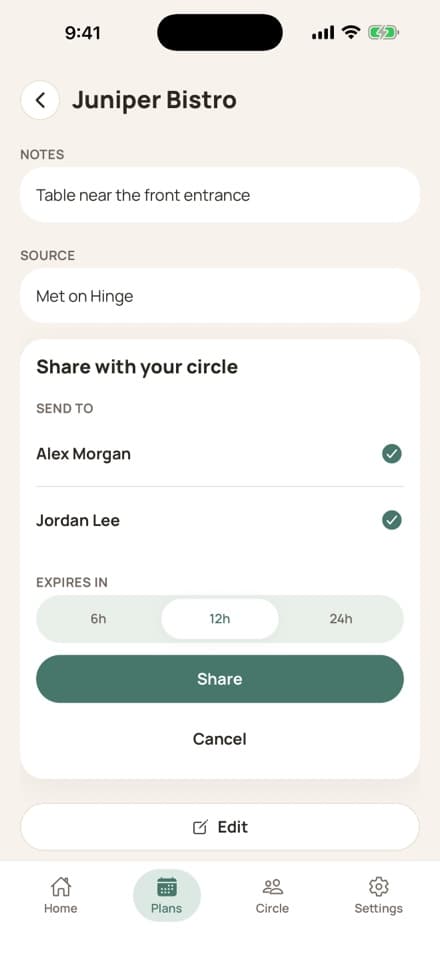
A first-date safety plan is a short agreement with yourself and someone you trust. It records where you expect to be, when you will check in, how you can leave, and what your trusted person should do if they cannot reach you. It should take minutes to make and be specific enough to act on.
No checklist can control another person or guarantee safety. The purpose is to reduce uncertainty and make it easier to ask for help. Responsibility for harmful behavior always belongs to the person causing harm.
1. Decide where you will meet
For an early date, consider a public, populated, staffed place. Write down the venue and address instead of relying on the name alone. If the plan changes, update your trusted contact before moving locations when it is safe to do so.
2. Keep a transportation option you control
Know how you will arrive and leave. That might be your own vehicle, public transit, a rideshare, or a friend who has already agreed to pick you up. Keep enough battery and a backup payment method for the trip home. You do not need to stay because leaving feels inconvenient or impolite.
3. Choose your check-in person
Pick someone who will notice and respond. Share the venue, expected timing, the dating profile or name you know, and your transportation plan. Ask before sharing. A trusted contact should understand the job and be available during the agreed window.
4. Make the check-in actionable
A vague promise to text later is easy to miss. Choose a time and define what silence means. For example: call once, send a message, wait ten minutes, then contact another circle member. Decide in advance when the plan calls for emergency services. If there is immediate danger or an emergency requiring police, fire, or medical help, call 911.
5. Prepare an exit that does not require negotiation
Notice exits and staff when you arrive. Keep your phone and essential belongings with you. You may choose a code word with your trusted person that means call me, arrange a ride, or contact help. The action attached to the code matters as much as the word.
6. Close the loop
Tell your trusted person when you are home or when they are no longer on call. In DateSafe, ending an active session stops that session and its location sharing. Closing the loop keeps the system useful and prevents unnecessary worry.
Sources and further help
DateSafe is not an emergency service. These independent resources provide additional guidance, and 911 should be called for immediate emergency assistance in the United States.
- Tips for Safer Dating: Online and In-Person, RAINN
- Personal Safety Planning Tool, National Domestic Violence Hotline
- Calling 911, National 911 Program