Sharing your location isn't clingy, it's a system
How to share your location on a date without it feeling weird: consent, expiration, and why the right people seeing the right things beats broadcasting everything.
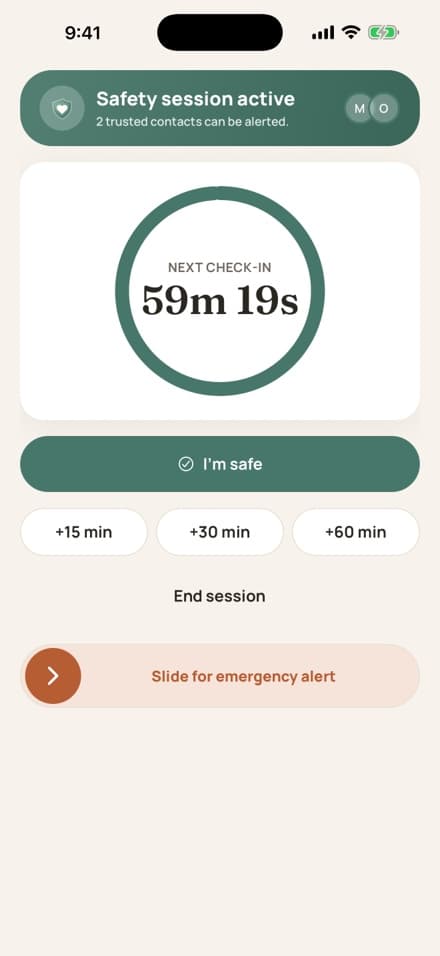
Somewhere along the way, location sharing picked up a reputation problem. It reads either as parental surveillance or as something a jealous partner demands. Both associations are earned, honestly. A lot of location sharing is built badly.
Here’s the version that isn’t weird: you choose the people, you choose the window, and it turns itself off.
The three rules
Rule one: it’s opt-in on both sides. The person watching over you should agree to that job. In DateSafe your circle joins by accepting a text invite. Nobody gets drafted into being your emergency contact, which also means everyone in your circle actually wants to be there.
Rule two: it expires.Sharing where you are during a three-hour date is a safety measure. Sharing where you are forever is a lifestyle, and one you probably didn’t mean to sign up for. When a DateSafe session ends, so does the sharing. Automatically. Nothing to remember to switch off.
Rule three: right people, small scope.Your best friend needs to know the restaurant. She doesn’t need a live feed of your whole month, and a stranger on the internet needs nothing at all. Scope is what separates “my circle has my back” from “I’m broadcasting.”
The awkward conversation, unawkwarded
Asking a friend to watch your location can feel like a big ask. It isn’t. Here is the entire script: “I have a date Thursday, can you be my check-in person?” Every friend I’ve ever met answers some version of “obviously, send me the details.”
People want to look out for each other. What they lack is a clean way to do it that doesn’t involve staring at a dot on a map all night. That’s the actual product we’re building: not location sharing, but the etiquette around it, turned into software.